General Information
Climate
The Netherlands share the temperate maritime climate common to much of Northern and Western Europe. The average day temperature in June 15° – 19° Celsius.
An umbrella or rain coat for occasional showers may be useful.
Crime
Crime levels are low in Amsterdam. However, we strongly advise you to watch out for cunning pickpockets, especially when on the train from and to Schiphol Airport, on crowded trams, buses or metros and while watching street performers.
Electricity
The voltage in the Netherlands is 220-240V. USA, English and some other foreign appliances require an adapter for the voltage as well as an adapter for the plug. Please bring your own adapter as there are no adapters available at the congress venue.
Insurance
Delegates are advised to arrange adequate travel, health and other insurance before they leave their home country.
Opening hours shops
In the city centre most shops are open 7 days a week.
Opening hours: 09.30 until 18.00 hrs (Monday to Saturday); 12.00-17.00 hrs. (Sunday in the city center only). On Thursday evening shops are open until 21.00 hrs.
Passports and visa
All visitors travelling to the Netherlands must be in possession of a valid passport. Participants should check with their local travel agents whether they require an entry visa for the Netherlands.
Time zone
The Netherlands and Amsterdam are in the Central European Time Zone, one hour ahead of GMT.
Tipping
Service is always included. However, it is customary to tip in restaurants, bars and when paying for taxi’s. As a general rule tipping between 5-10% should be adequate.
Transportation
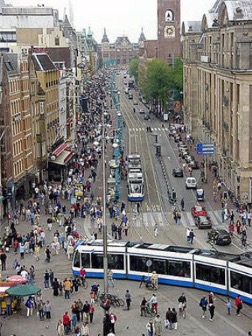
Amsterdam is a very compact city where your destination will usually not be at a great distance. The city is therefore ideal for getting around by foot, bicycle or public transport. Amsterdam has a very dense public transport system and tram, metro or bus stops are usually around the corner.
Cars are less suited for getting around in Amsterdam because the city can be considered rather car-unfriendly. Parking has to be paid for in almost the entire city and the rates can be substantial.
Disclaimer / Liability
In the unlikely case of cancellation of 6th Keloid Symposium 2026 meeting, the organizers (committee and conference organization) and service providers cannot accept liability for any consequential loss and shall have no liability to reimburse any other costs that may have been incurred, including transport costs, accommodation etc. Delegates are encouraged to take out travel insurance when making travel and accommodation arrangements.

Amsterdam
Amsterdam is the capital and most populous city of the Netherlands found within the province of North Holland. Amsterdam is colloquially referred to as the “Venice of the North”, attributed by the large number of canals which form a UNESCO World Heritage Site.
The Dutch capital has always been a well-known name in world history and played a central role in the history of the Netherlands. Even though it has all the advantages of a big city: rich culture, lively Amsterdam nightlife, international restaurants and good transport – it is also informal and quiet.
The Dutch capital is considered one of the most multicultural cities in the world, with at least 177 nationalities represented. A few of Amsterdam’s notable residents throughout history include: painters Rembrandt and Van Gogh, the diarist Anne Frank, and philosopher Baruch Spinoza.
The Amsterdam Stock Exchange is considered the oldest “modern” securities market stock exchange in the world. Many large Dutch institutions have their headquarters in the city. Also many of the world’s largest companies are based in Amsterdam or have established their European headquarters in the city, such as leading technology companies
The Port of Amsterdam is the fifth largest in Europe. The KLM hub and Amsterdam’s main airport: Schiphol, is the Netherlands’ busiest airport as well as the third busiest in Europe.
Short history
Amsterdam’s name derives from Amstelredamme, indicative of the city’s origin around a dam in the river Amstel. Originating as a small fishing village in the late 12th century, Amsterdam became one of the most important ports in the world during the Dutch Golden Age of the 17th century, and became the leading centre for finance and trade. The rings of canals in the old city center date from this period with residents of the wealthy citizens. Because of lack of space, these houses were mostly narrow with big narrow windows, decorative gable tops, very narrow stairs inside and a pulley outside to transport larger objects to upper floors.
In the 19th and 20th centuries, the city expanded, and many new neighborhoods and suburbs were planned and built.
Main attractions
Since it is not a very big city, all sites of interest are easy to reach. From Amsterdam canals to world-famous Amsterdam museums and historical Amsterdam sights, it is one of the most romantic and beautiful cities in Europe. Canal cruises are a popular way to see the city from the perspective of its canals. For an authentic local experience, rent a bike and cycle your way around.
Amsterdam’s main attractions include the Rijksmuseum, the Van Gogh Museum, the Stedelijk Museum, Hermitage Amsterdam, the Concertgebouw, the Anne Frank House, the Scheepvaartmuseum, the Amsterdam Museum, the Heineken Experience, the Royal Palace of Amsterdam, Natura Artis Magistra, Hortus Botanicus Amsterdam, NEMO, the red-light district and many cannabis coffee shops.
Transport to The Netherlands
Amsterdam Schiphol Airport https://www.schiphol.nl/en/
Amsterdam Airport Schiphol is acknowledged as one of the world´s best airports.
With 490,000 flights and 45 million passengers a year, Schiphol has the highest standards of service and is constantly improving the benefits for the traveler. From all over the world direct scheduled services fly non-stop to Schiphol. These scheduled services fly from 129 destinations within Europe and from 108 non-European destinations. In addition there are charter flights to and from Amsterdam Airport Schiphol. As many as 80 airlines fly to Schiphol, conveniently located in the heart of Western Europe. Amsterdam Airport Schiphol enjoys a very special status among its users, ranking first among the world’s airports in virtually every poll of frequent international travelers.
On arrival at the airport, you can take a train to Station Amsterdam Amstel within 30 minutes. Furthermore, super-fast trains and well-made motorways will bring you to Amsterdam from all major European destinations. The Thalys high-speed train and other international express trains arrive at frequent intervals every day from destinations all over Europe.
Transport in Amsterdam
The compactness of the city minimizes the need for taxis and public transport as almost everything is within walking distance. Nevertheless public transport in Amsterdam – trains, buses, tram and metro – is most efficient, modern, reliable.
Taxi ranks are located outside hotels, business and shopping areas. Trams, buses and taxis move rapidly, even during rush hours, thanks to separate traffic lanes.
Netherlands Railway (NS) https://www.ns.nl/en
Public Transport in Amsterdam (GVB- trams, buses, metro) https://www.gvb.nl/en